Beyond Possession: The Hidden Drama of Spanish Football
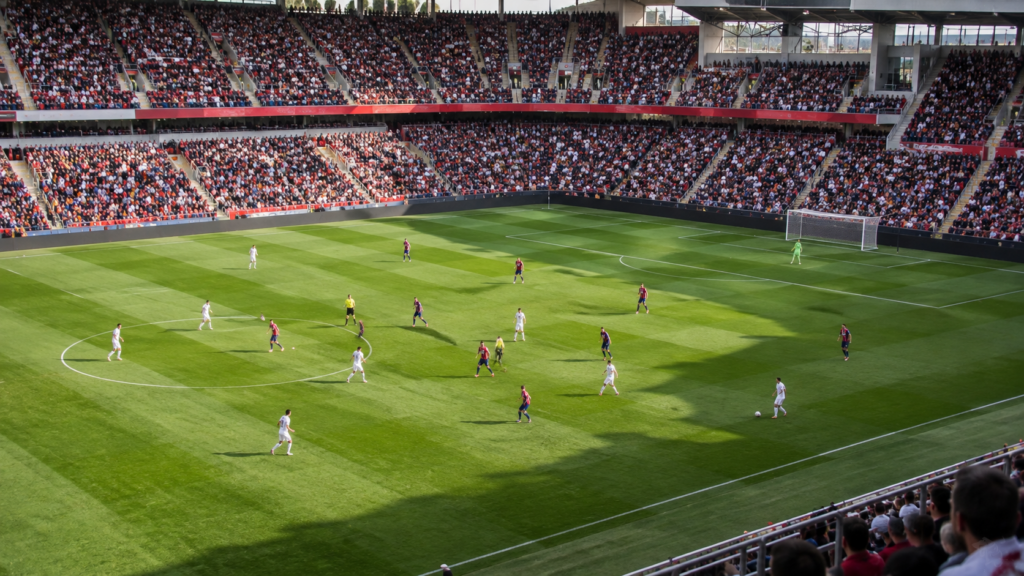
Spanish football has long been associated with technical precision, intelligent movement and an appreciation for the details that shape a match. The country’s top division brings together clubs with different histories, regional identities and football philosophies, creating a competition in which no single tactical approach defines every encounter. A match may develop through patient possession, sudden counterattacks, intense pressing or carefully constructed attacks through the centre. For supporters who want to understand these contrasting approaches, матчи Ла Лиги в записи offer an opportunity to revisit the complete performance and discover the decisions that often remain hidden behind the final score.
Spanish Football Is More Than a Possession Game
La Liga is frequently associated with teams that value control of the ball. This reputation has roots in the technical traditions of Spanish football, where passing accuracy, close control and coordinated movement have played important roles in the development of the game. However, reducing the entire competition to possession would overlook much of what makes it interesting.
Different clubs approach matches according to their resources, coaching philosophies and the characteristics of their players. Some attempt to dominate the central areas through short passing combinations. Others use direct forward movement, quick transitions or aggressive pressing to disrupt opponents before they can establish control.
These differences become particularly noticeable when watching a complete match. A team may begin by building attacks patiently from the defensive line, only to change its approach when the opponent blocks the central passing lanes. Another side might initially defend deep but gradually move forward as it recognises opportunities to press.
The tactical identity of a club is therefore not simply a fixed formation or a preferred style. It is a collection of decisions that evolve in response to the opponent, the scoreline and the changing rhythm of the contest.
The Art of Creating Space
One of the most fascinating aspects of Spanish football is the way players use space. A successful attacking move often begins long before the ball reaches the player who eventually takes a shot.
Midfielders may move towards the touchline to draw an opponent away from the centre. Full-backs can advance to create an additional passing option, while wingers move into narrower positions to open space on the outside. Forwards frequently change their positions to make defenders choose between following them and protecting the space behind the defensive line.
These movements require coordination and awareness. If one player moves too early, the entire attacking pattern can lose its effectiveness. If the timing is right, however, a seemingly ordinary passing sequence can suddenly create a dangerous opportunity.
Short highlights rarely communicate the full complexity of these situations. They usually show the final pass, the shot or the goal, leaving the earlier movements outside the frame. A complete recording makes it possible to observe how an attacking structure develops and why certain spaces become available.
For viewers interested in football tactics, these details offer a different way to appreciate the technical quality of La Liga. The most impressive moment is not always the spectacular finish. Sometimes it is the intelligent movement that makes the finish possible.
Midfield: Where the Rhythm of a Match Is Decided
The midfield is often the area where a Spanish league match reveals its true character. Teams compete not only for possession but also for the ability to determine where and how the game is played.
A technically gifted midfielder can influence the tempo by choosing when to accelerate an attack and when to retain the ball. A defensive midfielder may protect the back line while also serving as the first passing option during the construction of an offensive move. More advanced players look for spaces between the opposition’s defensive and midfield lines, where a single accurate pass can change the direction of an attack.
Watching the entire match helps explain how these responsibilities interact. A midfielder who appears quiet in a highlights package may have spent much of the game controlling the space around him, preventing the opposition from advancing through the centre. Another player may complete fewer passes but contribute through forward runs, pressing and quick combinations near the penalty area.
The contest for midfield control is also closely connected to defensive organisation. When one side loses possession, its players must react immediately. Some teams attempt to recover the ball high up the pitch, while others retreat into compact formations and wait for a suitable moment to counterattack.
These decisions shape the rhythm of the match and often determine which side can impose its preferred style.
Individual Brilliance Within a Collective System
La Liga has a long tradition of technically accomplished footballers capable of changing a match through creativity and precise execution. Yet individual talent rarely operates independently of the team’s structure.
A winger may possess exceptional dribbling ability, but his effectiveness depends partly on the movement of teammates around him. A striker’s positioning becomes more dangerous when midfielders can deliver passes at the right moment. A defender’s composure on the ball can help the entire team escape pressure and begin a new attacking phase.
This relationship between individual quality and collective organisation is particularly interesting when reviewing full matches. It becomes possible to recognise how often players create opportunities for one another without receiving immediate recognition.
A defender who steps forward at the correct moment may break an opponent’s attacking sequence. A midfielder who changes the direction of play can create an advantage on the opposite flank. A forward who makes an unselfish run can give a teammate the time and space needed to finish an attack.
Such contributions rarely dominate post-match conversations, but they are essential to understanding how teams function. Complete match viewing brings these less visible elements back into the story.
Regional Identity and the Character of Spanish Clubs
The appeal of La Liga also comes from the diversity of its clubs and the communities they represent. Spanish football reflects a country with distinct regional traditions, local rivalries and different relationships between cities and their teams.
A club’s identity is shaped by more than its results. It can be connected to the history of its neighbourhood, the development of local players, the character of its supporters and the atmosphere of its stadium. These elements influence how people experience football and why certain fixtures carry significance beyond their position in the league table.
Some matches are defined by long-standing rivalries. Others bring together clubs with different sporting ambitions, creating an encounter between established expectations and the determination of a team seeking recognition. Even fixtures that attract less international attention can reveal compelling stories about development, resilience and local pride.
Watching a complete match allows supporters to appreciate the atmosphere surrounding the action. The reactions of the crowd, the tension after a missed opportunity and the response to a successful defensive intervention all contribute to the emotional identity of a fixture.
This cultural dimension is an important part of Spanish football. The league is not simply a stage for individual stars; it is also a meeting place for communities with their own traditions and expectations.
Why Match Replays Reveal More Than Highlights
Highlights provide an efficient way to catch up with the most important incidents, but they inevitably compress the experience of a match. A ninety-minute contest contains long periods of tactical preparation, defensive work and gradual changes in momentum that cannot always be represented in a short video.
A replay gives viewers the opportunity to examine how a team responds after conceding a goal, whether a manager’s substitutions improve the balance of the side and how players adapt when their original strategy becomes ineffective.
It also makes it easier to distinguish between a result achieved through sustained control and one shaped by a small number of decisive moments. A team may dominate possession but struggle to create clear chances. Another may spend much of the match defending before producing a highly effective counterattack.
The complete performance provides context for these outcomes. It helps explain why a match developed in a particular direction and whether the final score accurately reflects the balance of play.
For supporters, this can make familiar fixtures interesting again. A match remembered mainly for one goal may reveal a completely different story when viewed from beginning to end.
Technology Is Expanding the Tactical Perspective
Technology has become an important part of modern Spanish football, influencing both professional analysis and the way supporters experience matches. Clubs use video-tracking systems, performance databases and detailed statistical models to examine passing sequences, player positioning, pressing behaviour and physical workloads. Coaches can study how a team moves as a unit rather than relying only on individual statistics.
Broadcast technology has also expanded the possibilities for viewers. Multiple camera angles, slow-motion replays, enhanced graphics and detailed match statistics provide additional context for important incidents. Video review systems have changed the process of assessing certain refereeing decisions, while digital platforms make it easier to revisit particular moments and examine them more closely.
These developments are especially valuable when studying tactical football. A replay can help viewers understand why a defensive line moved forward, how a passing lane was created or where an attacking combination began. Technology does not replace the excitement of watching the game, but it adds another layer of understanding to the experience.
The Importance of Adaptability
No team can expect to control every match in the same way. Opponents prepare carefully, formations change during play and individual circumstances can force managers to reconsider their plans.
Adaptability is therefore one of the most valuable qualities in modern football. A side that relies heavily on possession must know how to respond when its passing options are restricted. A team built around quick transitions needs to remain organised when the opposition refuses to leave space behind its defence.
La Liga provides plenty of examples of this tactical flexibility. Some matches develop into technical contests in midfield, while others become more direct and physically demanding. The ability to recognise these changes and respond effectively often separates a convincing performance from a disappointing one.
Full-match viewing makes these adjustments easier to identify. It shows not only what a manager intended to do before kick-off but also how the players translated those instructions into decisions on the pitch.
A Deeper Connection With the Spanish Game
The attraction of La Liga lies in its combination of technical quality, tactical variety and strong club identities. Its matches can be appreciated for the beauty of a passing sequence, the intelligence of a defensive movement or the courage required to change strategy under pressure.
Watching only the decisive moments provides a useful summary, but the complete match offers a much richer understanding of the sport. It reveals the work behind the goals, the decisions behind the formations and the individual contributions that shape collective performance.
For supporters who enjoy exploring football beyond the scoreboard, recorded matches create an opportunity to return to important encounters with a more attentive perspective. Every phase of play becomes part of a larger story, and even familiar results can reveal new details.
Spanish football rewards patience and observation. Its most compelling qualities are often found not in a single spectacular moment, but in the connection between dozens of small decisions made throughout the match.